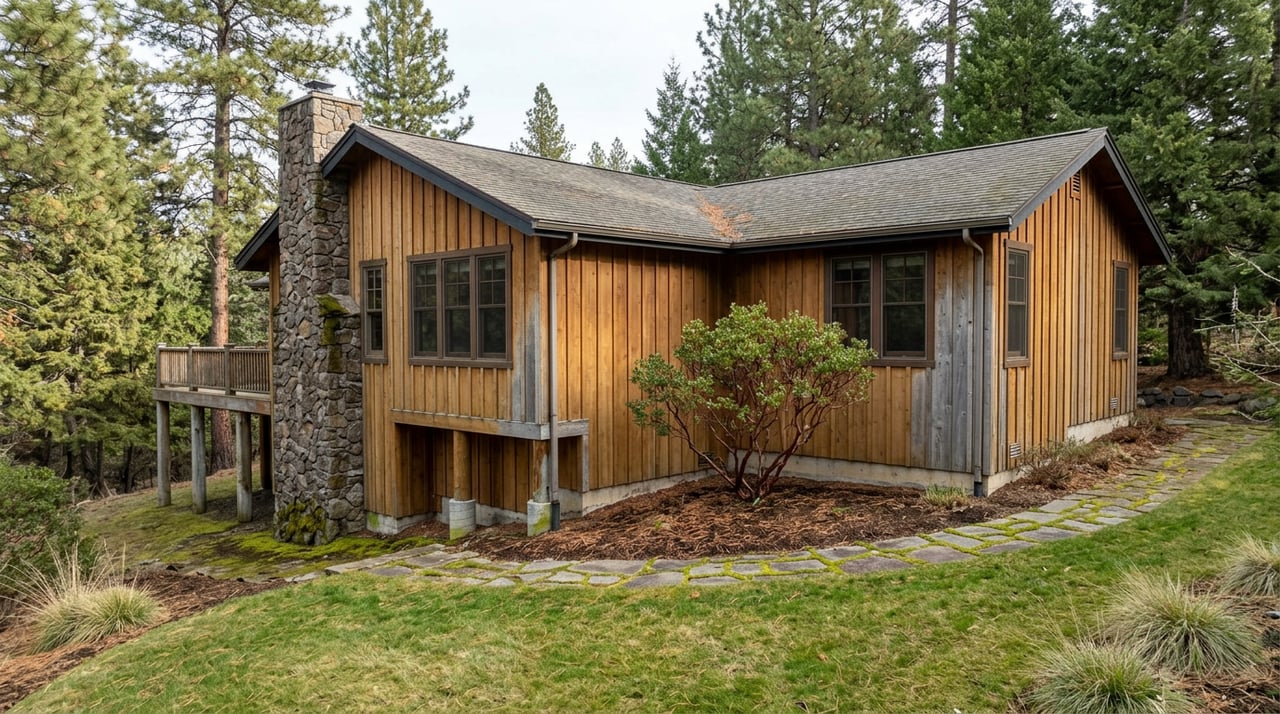
If you own a home on septic anywhere outside the Tuolumne Utilities District core, in the county's eyes, you're already qualified to check your own system. Tuolumne County's Environmental Health Division publishes a self-inspection checklist called ROSS, the Residential On-site Septic System evaluation, and the only requirements to use it are that you own the property and you've read the training guide. No license, no certification, no fee to the county. You dig up the lids, walk through the checklist, and file the results yourself.
That's a genuinely useful program for a homeowner who just wants to know their system is healthy between now and the next time they think about it. It is not the standard the county points to when a property changes hands. Buried in the same ROSS guidance is a line that a lot of sellers never see until an escrow officer asks for it: at the time of a property transfer, a licensed OM&M Specialist should conduct the inspection instead. Not the homeowner. A certified Operation, Maintenance and Monitoring professional, doing a flow test, a drawdown check, and a pressure test where applicable. That's a different exam than the one the county hands you for free, and the gap between the two is where Sonora-area sales lose weeks they didn't need to lose.
Why the self-check and the sale-day check aren't the same document
The ROSS checklist is built for a homeowner working alone with basic tools. It's designed to catch the obvious stuff: sewage surfacing on the ground, backups into the house, a float switch that's stopped working, a riser that's leaking. Useful information, and worth doing on the county's recommended cycle even if you have no plans to sell.
But an OM&M Specialist inspection goes further. It verifies that a pump system's timer settings are actually correct, that the drainfield is accepting effluent at the rate it's supposed to, and that the whole assembly performs under an actual load rather than just passing a visual check. A buyer's lender, a title company, or a cautious buyer's agent will generally want to see that level of documentation before they're comfortable closing on a home that isn't on public sewer. A self-filed ROSS form from eighteen months ago doesn't answer the question they're asking.
Here's the practical version of what the county is telling sellers, in plain terms: doing your own periodic check is good stewardship, but it isn't the paperwork that satisfies a real estate transaction. If you want a smooth escrow, budget for the specialist inspection separately from whatever self-checks you've already done.
The system-type split that changes your timeline
Tuolumne County doesn't treat every septic system the same way on the calendar. A conventional gravity system, tank plus gravity drainfield and nothing mechanical in between, is expected to be evaluated at least once every three years. Anything with pumps or pressure distribution is expected to be checked more often, because there's more that can quietly fail between visits. If your Sonora-area property has a pump tank and a pressure-dosed drainfield rather than a simple gravity line, plan on a shorter runway before listing, not a longer one.
This matters because a lot of homes on the outer edges of Sonora, past the Tuolumne Utilities District's service boundary, were built or modified in an era when pressure systems were added to handle steeper lots or smaller parcels. If you're not sure which type you have, that's exactly the kind of thing a specialist confirms in the first ten minutes on site.
When there's no permit to point to
Older Sonora homes carry a separate wrinkle. Before the county required permits for septic installation, plenty of systems went into the ground with no record at all. If your property falls into that category, or if the as-built drawing on file is vague about where the tank and drainfield actually sit, the specialist may need extra time just to locate the components before they can evaluate them. The county keeps as-built records at the Environmental Health office on Yaney Avenue in Sonora and will provide copies for a nominal per-page fee, so it's worth requesting your file before you ever call an inspector. Knowing whether a record exists, and what it says, changes how much time to build into your listing timeline.
What this looks like if you're getting ready to list
A few things worth doing before your Sonora home goes on the market, not after you're in contract:
- Pull your septic permit and as-built drawing from the county's Environmental Health office, or confirm none exists
- Identify whether your system is gravity, pump, or pressure-dosed, since that changes both the evaluation cycle and what the specialist will test
- Book a licensed OM&M Specialist inspection specifically, not just a pumping visit, and ask for documentation you can hand to a buyer
- If the tank hasn't been pumped in the last few years, plan for that as part of the same visit rather than a separate trip
El Dorado Septic Service, which has served Tuolumne, Calaveras, Mariposa, and Alpine counties for more than two decades, is one example of the kind of established, county-familiar provider sellers in this market turn to for that documentation. The point isn't any single company. It's ordering the right inspection early enough that a finding, if there is one, becomes a repair item you handle on your own schedule instead of a surprise a buyer's lender flags with ten days left before closing.
Why this is a Tuolumne thing, not just a California thing
California doesn't run a single statewide septic inspection law the way some other states do. What you're required to disclose to a buyer runs through the standard Transfer Disclosure Statement, and it's genuinely broad: known defects, system age, maintenance history, anything material you're aware of. But the specific mechanics, who's qualified to inspect, how often, what records the county keeps, are set at the county level. That's why a seller who's moved from a different California county, or from out of state, can be caught off guard here. The disclosure obligation feels familiar. The ROSS program and the OM&M Specialist distinction are specific to how Tuolumne County has chosen to run its Environmental Health oversight, and they don't show up in generic guidance written for the state as a whole.
Frequently Asked Questions
Does every home in Sonora have a septic system? No. Properties inside the Tuolumne Utilities District's service area or on other public sewer connections aren't affected by any of this. It's specifically homes on private on-site systems, which is common once you're a short distance outside the downtown core, that need to think through the ROSS versus OM&M Specialist distinction.
If I'm not selling anytime soon, do I still need to worry about this? The three-year (or more frequent, for pump systems) self-evaluation cycle is good practice regardless of whether a sale is on the horizon. It's the transfer-specific specialist inspection that only becomes relevant once you're actually preparing to list.
What if my system predates any permit requirement? That's not unusual for older Sonora homes. It means the specialist may need to locate tank and drainfield components with more legwork, which is exactly why it helps to start that process before you're under contract rather than after.
If you're weighing a sale in the Sonora area and you're not sure what kind of system your home has, or whether your records are even on file, that's precisely the sort of groundwork Leeann Lupo helps clients sort out well before a listing goes live. Talk with Leeann, your hometown specialist, and let's get the paperwork right the first time.